Best Broadheads in 2026: Fixed and Mechanical Compared
The G5 Montec ($44.94 for three) is the best broadhead for most archers because it is one piece of re-sharpenable steel with nothing to loosen. If your bow will not group fixed heads with field points, the RAGE Hypodermic ($48.00) flies closer to a field point. On a budget, the Muzzy MX-3 costs $29.50 for three.
Broadhead choice is settled by two things and neither is the picture on the packet: how much energy your setup has to spare, and how well your bow is tuned. A well-tuned bow shoots almost any decent head accurately. A poorly tuned one turns every fixed blade into a steering vane and sends arrows somewhere you did not aim.
Below are six heads across three tiers, split between fixed blade and mechanical, with the reasoning that actually separates them. Safety first: broadheads are surgically sharp, they should be handled with a wrench or a quiver hood, and they must never be shot into a target that is not rated for them.
Best broadheads by experience level

NAP Spitfire MAXX 100 Grain Broadhead, 4 Pack
Rear-deploying blades and a cut-on-contact tip, from a brand that has been making mechanicals for decades. Four to a pack, so one is a dedicated practice head.
Best for: A first mechanical on a bow already shooting field points well.
Check price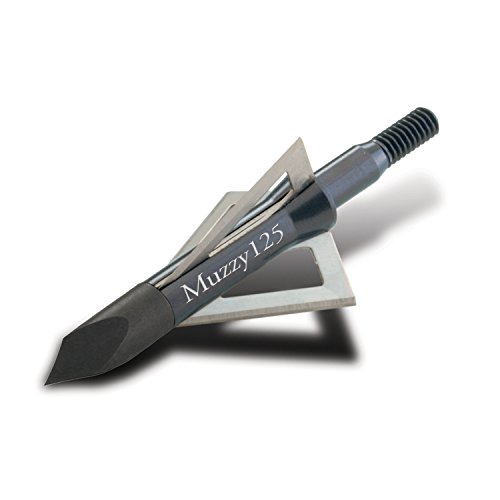
Muzzy MX-3 100 Grain 3-Blade Broadhead, 3 Pack
A simple replaceable-blade fixed head at a price that lets you shoot a few into a target without wincing. Forgiving of lower-poundage bows.
Best for: Lower draw weights and archers who want fixed-blade simplicity.
Check price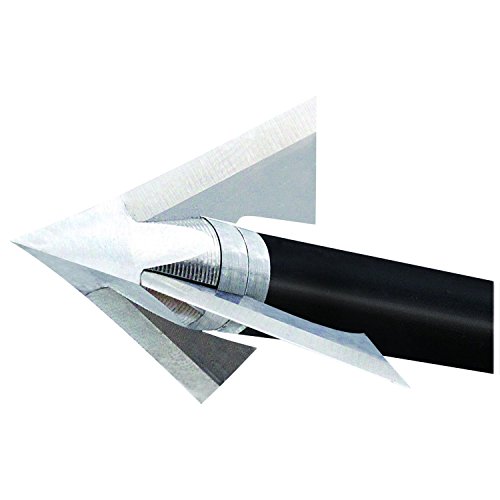
QAD Exodus Full Blade Broadhead, 100 Grain, 3 Pack
The blades sit inside the ferrule length rather than hanging off the front, which shortens the head and cuts the steering effect that makes fixed heads plane away from field points.
Best for: Fast bows where longer fixed heads refuse to group with field points.
Check price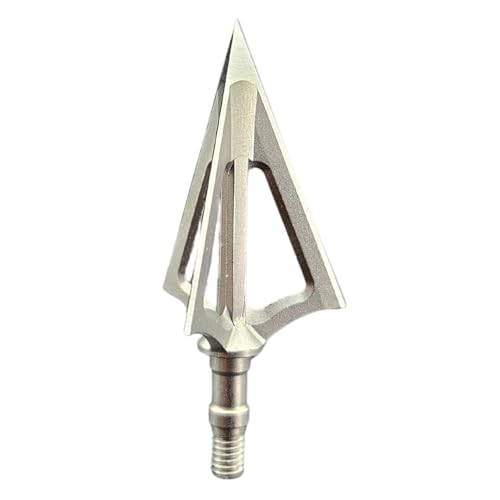
G5 Outdoors Montec 100 Grain Broadheads, 3 Pack
One-piece machined steel, so there are no blade screws to loosen and nothing to reassemble. Re-sharpenable, which makes the per-shot cost of practising with your hunting heads close to zero.
Best for: Archers who want to practise all season with the exact heads they hunt with.
Check price
RAGE Hypodermic 2-Blade 100 Grain Broadhead
A slim one-piece stainless ferrule and a hybrid tip, with the shock collar system holding the blades closed in flight. Flies close to a field point because almost nothing is exposed until impact.
Best for: Bows making enough energy to spare some on blade deployment.
Check priceSEVR Titanium 2.0 Pivoting Broadhead
Sold factory-direct rather than through general retail, and built around a lock-and-pivot blade design with a practice screw that lets you shoot the actual hunting head into a target without opening it.
Best for: Archers who paper-tune, verify broadhead flight and buy on design rather than shelf availability.
Find on AmazonPrices change often, confirm on Amazon. As an Amazon Associate we earn from qualifying purchases.
How we chose
These picks come from published manufacturer specifications, cross-checked against verified owner reviews and pro shop guidance. We do not test gear in person and we will not pretend otherwise. What we can do is compare the numbers that matter and flag where two spec sheets are quietly measuring different things.
Three filters removed most of the market. First, the head has to be a known design: broadheads are the one accessory where an unbranded copy is a genuine safety problem, because blade retention failure at 280 fps is not a minor inconvenience. Second, ferrule construction over blade count. A one-piece or machined stainless ferrule holds concentricity better than a stamped assembly, and concentricity is what makes a head spin true. Third, practice cost. A head you cannot afford to shoot is a head you will never confirm before a season.
Fixed blade versus mechanical, decided properly
A fixed head has cutting surface exposed the whole way to the target. That surface catches air and steers the arrow, so any imperfection in arrow flight is amplified. In exchange it wastes nothing on impact: everything the arrow carries goes into penetration.
A mechanical keeps its blades folded until impact, so it presents almost the same profile as a field point and flies like one. The cost is that opening the blades consumes energy, and the deployment mechanism is one more thing that can fail. That is why mechanicals suit setups with margin to spare and fixed heads suit lower draw weights, shorter draws and heavier arrows.
The short rule: if your bow is tuned and your energy budget is modest, shoot fixed. If your setup is fast, heavy on energy, and you cannot get fixed heads to group, shoot mechanical rather than hunting with a head you do not trust. Our fixed versus mechanical broadheads comparison works through the trade-off in more depth.
| Model | Type | Price | Grain | Ferrule | Re-sharpenable |
|---|---|---|---|---|---|
| NAP Spitfire MAXX | Mechanical | $24.99 | 100 | Aluminium | No |
| Muzzy MX-3 | Fixed | $29.50 | 100 | Aluminium | Replaceable blades |
| QAD Exodus | Fixed | $39.99 | 100 | Steel | Replaceable blades |
| G5 Montec | Fixed | $44.94 | 100 | One-piece steel | Yes |
| RAGE Hypodermic | Mechanical | $48.00 | 100 | One-piece stainless | No |
| SEVR Titanium 2.0 | Mechanical | ~$50 | 100 | Titanium | No |
Who should not buy the Expert tier
The SEVR Titanium 2.0 is the pick for archers who paper-tune, who shoot bare shafts, and who check broadhead flight at 40 yards before a season. If none of that describes how you work on your bow, it is the wrong purchase and it will not make you more accurate.
Skip the Expert tier entirely if any of the following are true: your bow has not been tuned since it left the shop, you have never shot a broadhead into a rated target, or you are still settling on arrow spine and point weight. A $45 Montec on a tuned bow outshoots a $60 head on an untuned one every time, and the tuning is free. Spend the difference on a broadhead-rated target instead, then revisit this.
Grain weight and what it does to your arrow
Point weight is not a preference, it is a tuning input. Adding weight at the front weakens dynamic spine, because the heavier tip makes the shaft flex more on release. Move from 100 to 125 grain and a shaft that was correctly spined can start behaving like one a size too weak.
The upside is front of centre. Weight forward stabilises the arrow in flight and helps it recover faster from the imperfect launch every bow produces. Target archers usually sit in the 7 to 12 percent range and hunting builds run 10 to 15 percent. Run your numbers through the FOC calculator before you commit to a grain weight, and check the result against the arrow spine calculator.
One hard floor applies regardless of what you are chasing: total arrow weight must never fall below 5 grains per pound of draw weight. A 70 lb bow needs at least 350 grains on the string. Going under risks damaging limbs and cams and voids essentially every manufacturer warranty. Check total weight with the total arrow weight calculator.
Why broadheads and field points land in different places
Almost every archer meets this problem, and almost every archer tries to fix it with the sight. That is the wrong tool. Field points have no meaningful surface area at the front, so they are steered entirely by the fletching at the back. Add a broadhead and you have put a small wing at the front of the arrow, pulling it in whatever direction the shaft is already pointing when it leaves the string.
So the broadhead has not created a problem, it has revealed one. The causes, in the order worth checking: rest centreshot, cam timing and synchronisation, nocking point height, arrow spine, and fletching contact with the rest. The compound bow tuning guide walks the sequence. Only once broadheads and field points group together should the sight move.
Two shortcuts help while you work. A shorter head with the blades held inside the ferrule length, such as the QAD Exodus, has less steering effect than a long three-blade. And spinning each assembled arrow on a spin tester finds bent ferrules and crooked inserts, which cause a surprising share of unexplained fliers.
Buying tips
- Buy the same head twice. Get a pack to practise with and a pack to hunt with, or buy a re-sharpenable one-piece design. A head that has been shot into foam a dozen times is no longer the head you sighted in with.
- Match your practice target. Standard bag targets are destroyed by broadheads. You need a rated foam target, which is a real line item in the budget, not an afterthought.
- Keep grain weight consistent with your build. Changing point weight after tuning undoes the tuning. If you want to try 125 grain, re-check arrow flight afterwards.
- Handle with a wrench. Every serious injury in this category happens off the range: loading a quiver, sorting a pack, reaching into a bag. Use the plastic wrench that comes in the box.
- Check local regulations. Minimum cutting diameter, blade count and mechanical legality vary by state and by species. Confirm before you buy, not after.
- Do not overspend before the bow is tuned. Tuning is free and moves groups more than any head in this list.
Related reading
- Fixed versus mechanical broadheads, the full trade-off
- Arrow kinetic energy calculator, KE and momentum for your setup
- Arrow building guide, spine, inserts and point weight in order
- Best 3D archery targets, the broadhead-rated targets you need to practise on
Frequently asked questions
What is the best broadhead for most archers?
The G5 Montec at around $45 for three is the best default. It is one piece of machined steel, so nothing can loosen in flight, and it can be re-sharpened, which means you can practise with the same heads you hunt with instead of buying separate practice points. If your bow will not group fixed heads with field points, the RAGE Hypodermic at around $48 is the honest alternative.
Are fixed or mechanical broadheads better?
Neither wins outright. Fixed heads have no moving parts and lose nothing to blade deployment, so they suit lower draw weights and heavier arrows. Mechanicals fly closer to a field point because the blades are tucked away, which forgives a bow that is not perfectly tuned. The real decision is your energy budget and your tuning discipline, not brand loyalty. Our full comparison covers the trade-off in detail.
What grain broadhead should I shoot?
Match the point weight you tuned with. One hundred grain is the default because most arrows are built around it, but 125 grain raises front of centre and stiffens flight at the cost of some speed. Changing point weight changes dynamic spine, so a heavier head effectively weakens your shaft. Do not swap grain weight in the week before a season without re-checking arrow flight.
Why do my broadheads hit somewhere different from my field points?
A broadhead has surface area at the front of the arrow, so it steers the shaft toward whatever direction the arrow is already pointing. Any small tuning error that field points hide becomes visible. The fix is bow tuning rather than sight adjustment: check centreshot, cam timing and arrow spine first. Chasing it with the sight moves the problem instead of solving it.
How much kinetic energy do I need for a broadhead to work?
Energy is the wrong first question. Arrow build order matters more: get spine correct, get front of centre into the 10 to 15 percent range for hunting, then check energy. As a floor, respect the 5 grains per pound of draw weight minimum, because dropping below it risks damaging the bow and voids most warranties. Mechanicals spend energy opening blades, so they suit setups with margin.
Can I practise with my hunting broadheads?
Yes, and you should shoot at least a few before hunting so you know where they land. Use a target rated for broadheads, because standard bag targets are not and will be destroyed. One-piece heads such as the Montec re-sharpen easily, so practice costs nothing but time. Many mechanicals sell a matched practice head so you are not deploying blades into foam every shot.
How we choose: we compare published manufacturer specifications, verified owner reviews, and pro shop guidance. We do not test gear in person. Draw weight and arrow spine affect safety, so follow your bow manufacturer's specifications and have setup work checked by a qualified pro shop.