Best Bow Stabilizer in 2026: Length, Weight and Balance
The Bee Stinger Sport Hunter Xtreme 8 inch ($64.99) is the best bow stabilizer for most archers because removable end weights let you tune pin float instead of accepting the factory balance. The LimbSaver LS Hunter Lite ($26.99) is the best budget option for damping alone, and a front and back bar set is the answer only if your bow torques sideways at full draw.
A stabilizer does two separate jobs that get talked about as one. It damps the vibration that makes a bow buzz after the shot, and it adds rotational inertia so the pin floats more slowly. Cheap bars do the first well. Only weight out in front does the second.
Below are picks from $27 to $218, plus how to decide what length and how much weight you actually want. The short version: 8 inches and a couple of ounces solves most hunting bows, and everything past that is a trade against carrying the thing through cover.
Best bow stabilizers by experience level

LimbSaver LS Hunter Lite Stabilizer, 7 inch
LimbSaver’s NAVCOM material is genuinely good at killing the post-shot buzz that makes a cheap bow feel cheap. Light enough that it barely changes how the bow hangs.
Best for: Quieting a package bow for under thirty dollars.
Check price
Trophy Ridge Static Stabilizer, 3 inch
Three inches buys damping without a bar to catch on a treestand rail or a ground blind window. You get very little balance benefit, and that is the trade you are choosing.
Best for: Blind and stand hunting where clearance beats aiming stability.
Check price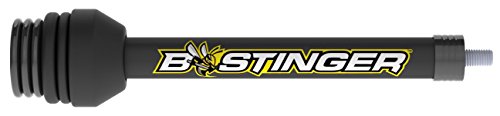
Bee Stinger Sport Hunter Xtreme Stabilizer, 8 inch
Removable end weights let you tune how hard the pin settles rather than accepting whatever the bar came with. Eight inches is the length that balances most hunting bows without becoming a handle.
Best for: The bowhunter who wants a steadier pin float and will experiment with weight.
Check price
Trophy Ridge Hitman Bow Stabilizer, 8 inch
Ships with two removable 1 oz weights and a quick connect and disconnect mount, so the bar comes off for the pack in and goes back on in the same position.
Best for: Hunters who walk in a long way and want the bar off the bow until they arrive.
Check price
Bee Stinger Pro Hunter MAXX Stabilizer, 8 inch
A stiffer carbon bar with a larger weight stack and better isolation than the Sport Hunter. The difference is small and real, and it is the last few percent, not a transformation.
Best for: Archers already running weight on a bar who want a stiffer platform.
Check price
Bee Stinger Sport Hunter Xtreme Stabilizer Set, 8 inch and 6 inch
A front bar plus a rear side bar and mount, which is the only way to correct a bow that torques sideways at full draw. Also the point at which a hunting bow becomes awkward in cover.
Best for: Target and 3D shooters, and open-country hunters who do not squeeze through brush.
Check pricePrices change often, confirm on Amazon. As an Amazon Associate we earn from qualifying purchases.
How we chose these stabilizers
We compared published manufacturer specifications, verified owner reviews and pro shop guidance across four criteria. Weight adjustability came first, because a bar with removable end weights can be tuned to your bow and your holding strength, and a fixed bar can only be accepted or replaced.
Bar stiffness came second: a stiff carbon bar transmits the weight's steadying effect directly, and a flexible one lets the weight wag. Damping material came third, since the polymer between the bar and the weight is what turns post-shot vibration into heat instead of noise. Mounting hardware came fourth, because a quick disconnect that returns the bar to the same position is worth having on any bow you pack in.
We do not test stabilizers in person. Lengths and weights vary within every model line here, so read the listing title carefully before ordering.
Length is a trade, not an upgrade
Physics is on the side of length. Moving the same weight further from your hand increases the rotational inertia of the whole bow, which means a given amount of hand tremble moves the pin less. A 10 inch bar with 2 oz on the end steadies the pin more than a 6 inch bar with the same 2 oz.
Everything else is on the side of shortness. A long bar catches on treestand rails, blind windows, branches and pack straps, and it is one more thing to manage while drawing on an animal. It also puts more weight further out, which tires a bow arm faster in cold weather when you may be holding at full draw longer than you planned.
That is why hunting bars cluster at 6 to 10 inches and target bars run to 30. If you hunt from stands and blinds, treat length as the constraint and tune with weight instead. If you shoot 3D and field courses, go longer, because nothing you shoot at is going to walk away.
Stabilizers compared
| Stabilizer | Price | Length | Weight adjustable | Best use |
|---|---|---|---|---|
| LimbSaver LS Hunter Lite | $26.99 | 7 in | No | Damping a package bow |
| Trophy Ridge Static | $34.98 | 3 in | No | Blinds and tight stands |
| Bee Stinger Sport Hunter Xtreme | $64.99 | 8 in | Yes, removable weights | General bowhunting |
| Trophy Ridge Hitman | $64.97 | 8 in | Yes, 2 x 1 oz | Pack-in hunts, quick detach |
| Bee Stinger Pro Hunter MAXX | $90.61 | 8 in | Yes, larger stack | Stiffer platform, more weight |
| Bee Stinger Sport Hunter Xtreme set | $217.65 | 8 in + 6 in | Yes, both bars | Correcting sideways torque |
How to actually tune one
Fit the bar with the lightest weight it came with and shoot 30 arrows at your normal practice distance. Watch what the pin does when it settles: you want it to slow into a small float and stay there, not to drift steadily in one direction and not to stop dead.
Then add an ounce and repeat. Somewhere in that process you will find the setting where the pin settles fastest and holds longest, and shortly after that a setting where your bow arm is complaining by arrow twenty. Take the one before the complaint. Cold hands, an awkward seated position and a longer hold than you planned are all normal in a stand, and a front end tuned at the limit of your strength on a warm afternoon will not feel the same there.
If the bubble on your sight will not sit level without wrist pressure, weight on a front bar will not fix it. That is sideways torque, and it needs either a grip and form correction or a back bar to counter it.
Who should not buy the Expert tier
A front and back bar system is the correct answer to one specific problem: a bow that consistently torques to one side at full draw. It is a poor answer to the general desire for more accuracy, and it makes a hunting bow noticeably wider and clumsier to carry and to raise inside a blind.
Skip the Expert tier if you hunt in timber or from stands, if your bubble already sits level with a relaxed bow hand, or if you have not yet experimented with weight on the front bar you already own. Most of the benefit people buy a $218 system for is available for $65 and an afternoon of adding ounces. Fix your draw length and your grip pressure before you buy hardware to compensate for either.
Buying tips
- Check the thread. Almost every bow uses a 5/16 x 24 stabilizer bushing, but confirm before ordering an adapter you do not need.
- Buy weights separately if needed. Most bars are sold with one or two ounces and accept more, and extra weight sets are inexpensive.
- Consider a quick disconnect for pack-in hunts. Being able to remove and refit the bar in the same position keeps your balance consistent.
- A short damping bar is not a waste. If the goal is a quieter bow rather than a steadier pin, 3 to 7 inches of good polymer does the job.
- Re-check your sight marks after adding weight. Balance changes can shift where the pin settles, so confirm at distance.
- Do not use a stabilizer to hide a tuning problem. Erratic arrow flight is a rest, spine or form issue. Start with the arrow spine calculator and the arrow rest setup.
Related reading
- Arrow kinetic energy calculator, KE and momentum for your setup
- Best archery release aid, a punched trigger moves the pin more than any bar can steady it
- Best compound bow for beginners, most package bows ship with a short stabilizer already fitted
- All gear reviews
Frequently asked questions
What is the best bow stabilizer for hunting?
For most bowhunters the Bee Stinger Sport Hunter Xtreme in 8 inch at around $65 is the best choice, because removable end weights let you tune how firmly the pin settles rather than accepting whatever the bar shipped with. On a tight budget the LimbSaver LS Hunter Lite at around $27 handles the vibration side well. Target and 3D archers should look at a front and back bar system.
Does a stabilizer actually make you more accurate?
It makes the bow easier to hold still, which is not quite the same thing. Weight out in front increases the bow rotational inertia, so small hand movements move the pin less and the pin float slows down. That gives you a longer window in which to execute a good shot. It does nothing for a bad release, a moving anchor point or incorrect arrow spine.
What length stabilizer should I use for bowhunting?
Between 6 and 10 inches suits most hunting bows. Shorter bars clear treestand rails and ground blind windows and give up balance benefit, longer bars steady the pin and catch on everything. Eight inches is the common compromise. Target archers routinely run 30 inches because they never have to move through cover with the bow at full draw.
How much weight should I put on the end?
Start with one or two ounces on a hunting bar and add in small increments, shooting a few dozen arrows at each setting. You are looking for the point where the pin settles quickly and does not feel like it is dragging your bow arm down after twenty shots. More weight steadies the aim and tires you faster, and treestand hunting punishes a heavy front end.
What is a back bar and do I need one?
A back bar mounts on a side bracket and extends behind the bow to counter sideways torque, usually a bow that wants to tip away from the sight side at full draw. If your bubble never sits level without conscious wrist pressure, a back bar fixes the cause rather than the symptom. It also makes the bow wider and more awkward to carry, so it suits target and open-country shooting more than timber.
Do stabilizers reduce noise?
Yes, that is the part cheap stabilizers do genuinely well. Rubber and polymer damping materials absorb the post-shot vibration that makes a bow buzz, which reduces both the noise and the hand shock you feel. A short damping stabilizer is a real upgrade on a package bow even if it does nothing measurable for your balance.
How we choose: we compare published manufacturer specifications, verified owner reviews, and pro shop guidance. We do not test gear in person. Draw weight and arrow spine affect safety, so follow your bow manufacturer's specifications and have setup work checked by a qualified pro shop.