Best Bow Quiver in 2026: Quiet, Light and Balanced
The Trophy Ridge Convoy ($52.01) is the best bow quiver for most bowhunters thanks to a soft-touch hood that silences broadheads and a detach mount. The Tightspot Quiver Lite ($159.99) is the best choice if you shoot with the quiver attached, because it pulls arrow weight in tight to the riser. Budget buyers should take the Trophy Ridge 5-Spot at $35.25.
A quiver looks like the least interesting accessory on a bow and is quietly one of the most consequential. It is the single largest lump of mass you will bolt to one side of the riser, and it is the most common source of noise on an otherwise silent setup. Both problems are solvable, and both are solved by design choices rather than by price.
Six picks follow across three tiers, with the criteria that separate a quiver you forget about from one you fight. The short version: hood liner and gripper design decide noise, and how close the arrows sit to the riser decides balance.
Best bow quivers by experience level

LWANO 5-Arrow Compound Bow Quiver with Quick Release
Holds five arrows, detaches from the bracket, and costs less than a dozen vanes. Good enough to learn what you actually want from a quiver before spending real money.
Best for: A first quiver, or a spare that lives in the truck.
Check price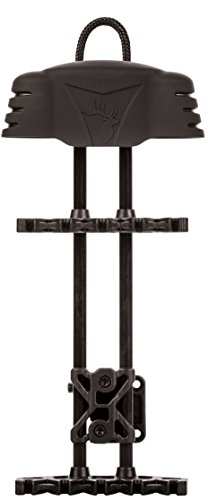
Trophy Ridge 5-Spot Archery Arrow Quiver
A real archery brand at a budget price. Two gripper bars instead of one, which stops arrows rattling loose on a long walk in.
Best for: The first quiver you keep, rather than the first quiver you replace.
Check price
Trophy Ridge Convoy Archery Arrow Quiver
A soft-touch hood liner, which is the difference between a broadhead seating silently and a click at exactly the wrong moment. Detach mounting and a hanging loop for treestand use.
Best for: Bowhunters who take the quiver off once they are settled.
Check price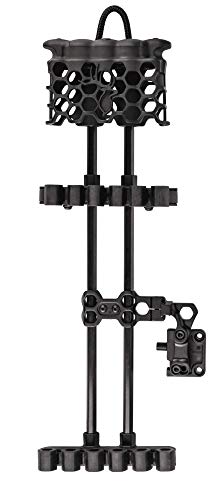
Trophy Ridge Hex Light Archery Arrow Quiver
Skeletonised body that strips weight off the side of the riser, which is where added mass most upsets bow balance. Noticeable on a long carry and on hold at full draw.
Best for: Archers who shoot with the quiver attached and feel the bow lean.
Check price
Treelimb 5-Arrow Compound Bow Quiver
A small-shop build with a machined bracket rather than a stamped one. Fewer plastic parts in the mounting path, which is where cheap quivers develop rattle.
Best for: Archers who want machined hardware without a flagship price.
Check price
Tightspot Quiver Lite 5-Arrow Bow Quiver
The whole design goal is pulling arrow mass in tight to the riser and letting you adjust it in three axes, so the quiver stops fighting your bow balance instead of merely weighing less.
Best for: Archers who shoot quiver-on and want the bow to hold the same either way.
Check pricePrices change often, confirm on Amazon. As an Amazon Associate we earn from qualifying purchases.
How we chose
Selection is based on published manufacturer specifications cross-checked against verified owner reviews and pro shop guidance. We do not test gear in person. What we can do is compare the construction details that repeatedly show up in owner complaints and separate the models that designed around them.
Three things did the filtering. Hood construction: a bare plastic hood is where broadhead noise comes from, and a foam or soft-touch liner is a cheap fix that many budget models still skip. Gripper count: two gripper bars hold an arrow at two points along its length, so it cannot pivot and rattle; one bar lets it swing. Mounting hardware: machined brackets stay tight, stamped and moulded ones develop play, and play is both noise and a shifting point of impact.
Noise: where it actually comes from
The obvious source is the broadhead seating into the hood, which on a hard plastic hood is a distinct click. A dense foam liner absorbs it completely, and that is why the Convoy is the default pick here rather than something cheaper.
The less obvious source is the arrow shaft itself. With a single gripper the shaft is held at one point and the nock end is free to move, so every step you take taps carbon against the gripper. Two gripper bars remove that entirely. The third source is the bracket, where a loose or flexing mount lets the whole quiver buzz against the riser on the shot. Check all three by loading the quiver, holding the bow at arm's length, and shaking it.
Balance: the reason expensive quivers exist
Five arrows with broadheads is somewhere around a pound of mass, mounted several inches off the side of the riser. That is a lever, and it torques the bow away from vertical at full draw. Most archers correct it unconsciously, which works until they are cold, tired or shooting at an awkward angle.
There are two answers. Reduce the mass, which is what a skeletonised quiver such as the Hex Light does. Or move the mass closer to the riser and let the archer adjust its position, which is the entire argument for the Tightspot design. Reducing weight is cheaper; moving it inboard works better, because a lever is about distance as much as load. If you are already running a stabiliser setup, note that a quiver is effectively a second, unbalanced one.
| Model | Price | Arrows | Hood liner | Detachable | Adjustable position |
|---|---|---|---|---|---|
| LWANO 5-Arrow | $16.99 | 5 | Basic foam | Yes | No |
| Trophy Ridge 5-Spot | $35.25 | 5 | Foam | Yes | No |
| Trophy Ridge Convoy | $52.01 | 5 | Soft-touch | Yes | Limited |
| Treelimb 5-Arrow | $69.99 | 5 | Foam | Yes | Limited |
| Trophy Ridge Hex Light | $75.97 | 5 | Foam | Yes | Limited |
| Tightspot Quiver Lite | $159.99 | 5 | Soft-touch | Yes | Three axes |
Who should not buy the Expert tier
The Tightspot Quiver Lite costs roughly four times the Trophy Ridge 5-Spot and does the same basic job. It earns the price only if you shoot with the quiver attached. Its advantage is three-axis adjustment that lets you dial arrow mass in close to the riser and forward or back until the bow holds the way it does bare.
Do not buy it if you take the quiver off before you shoot, which most treestand hunters do. Do not buy it if you are still shooting a first bow and have not yet sorted arrow spine, rest and sight, because it will not move a group. And do not buy it as a target archer, since a target setup does not carry a quiver on the bow at all. In those cases the Convoy at a third of the price is the smarter buy and the difference goes toward arrows.
Fitting and setup
Most modern compound risers use a standard two-hole quiver mount, and most quivers ship with a bracket for it. Check that a sight or rest is not already using those holes. If your riser lacks the pattern, look for a bow-specific bracket from the quiver maker rather than forcing a universal one.
Once mounted, position matters more than people expect. The quiver should sit far enough forward that the broadhead hood clears your cam and string at rest, and far enough back that the nock ends are not catching your arm on a draw. Load it with the arrows you actually hunt with, then re-check that the bow still sits level in your hand.
Then shoot it. Sight in with the quiver in whatever state you intend to hunt in, and confirm against the numbers from the kinetic energy calculator so you know your effective range with a real, loaded bow rather than a bare one.
Two-piece, one-piece and hip quivers
Bow-mounted quivers come in two layouts and the difference is not cosmetic. A one-piece quiver is a single body bolted to the riser, which is simpler, more rigid and usually quieter, at the cost of being fixed in position. A two-piece splits the hood and the gripper onto separate mounts, spreading arrow mass along the riser and letting you set the spacing to your arrow length. Two-piece designs suit long arrows and tall archers; one-piece designs suit anyone who takes the quiver on and off constantly.
Then there is the option of not mounting one at all. A hip or back quiver removes every balance and noise problem discussed here by taking the arrows off the bow entirely. Target and 3D archers use them almost universally for exactly that reason, and many bowhunters carry a hip quiver for the walk in and a small bow quiver for the sit.
If you are undecided, buy the cheap bow quiver first. It costs less than a set of vanes, and shooting with it for a season tells you more about what you want than any spec sheet will.
Buying tips
- Prioritise the hood liner. It is the cheapest fix for the loudest problem and the first thing budget models cut.
- Count the gripper bars. Two, always. One gripper means arrows pivot and tap.
- Match arrow diameter. Small-diameter hunting shafts need grippers rated for them, or they slip out on a walk in.
- Detachable is not the same as adjustable. Nearly every quiver detaches. Very few let you reposition arrow mass relative to the riser, which is the feature that fixes balance.
- Practise in your hunting configuration. Quiver on or quiver off, be consistent between the range and the field.
- Check hood depth against your broadheads. Long fixed heads bottom out in shallow hoods, which is both noisy and unsafe.
Related reading
- Best broadheads, and how their length affects hood fit
- Total arrow weight calculator, because five loaded arrows is real mass
- How to tune a compound bow, including balance and holding weight
- Best bow cases, for transporting a bow with the quiver attached
Frequently asked questions
What is the best bow quiver?
For most bowhunters the Trophy Ridge Convoy at around $52 is the best balance, because it has a soft-touch hood liner that silences broadheads seating and a detach mount for treestand use. If you shoot with the quiver attached and want the bow to balance the same either way, the Tightspot Quiver Lite at around $160 is built specifically for that. On a budget the Trophy Ridge 5-Spot covers the basics at around $35.
Should I shoot with the quiver on or off the bow?
Whichever you choose, practise that way. A loaded quiver adds mass to one side of the riser, which changes how the bow holds and where it settles. Shooting all summer with the quiver off and then hunting with it on introduces a variable at the worst moment. Detachable quivers are useful, but only if you sight in and practise in the configuration you will actually shoot.
How many arrows should a bow quiver hold?
Five is the practical standard and covers almost every situation, since a hunt rarely needs more than a couple of arrows and extras add weight in the worst place. Three-arrow quivers exist mainly to save weight for archers who carry a separate hip or back quiver. Seven-arrow models are a target and 3D course convenience rather than a hunting need.
Do bow quivers cause noise?
They are one of the more common sources of it. Noise comes from three places: the broadhead seating against a hard hood, arrows rattling in a single gripper bar, and the mounting bracket flexing against the riser. A soft hood liner, two gripper bars and machined mounting hardware solve all three. Check for rattle by holding the loaded bow and shaking it gently before you leave the truck.
Does a quiver affect accuracy?
Indirectly, and more than most archers expect. Mass hung off the side of the riser acts as an asymmetric stabiliser and tilts the bow at full draw, which you then correct without noticing until you are tired or cold. Quivers that pull the arrows in tight to the riser reduce this. The bigger issue is inconsistency: switching between quiver on and quiver off shifts impact.
Will any quiver fit my bow?
Most modern compounds share a standard two-hole quiver mounting pattern on the riser, and most quivers ship with a bracket for it. Problems appear on older bows, some youth models and bows where a sight or rest already occupies the holes. Check your riser before ordering, and be aware that some brands sell bow-specific brackets that mount cleaner than a universal one.
How we choose: we compare published manufacturer specifications, verified owner reviews, and pro shop guidance. We do not test gear in person. Draw weight and arrow spine affect safety, so follow your bow manufacturer's specifications and have setup work checked by a qualified pro shop.