Best Archery Target in 2026: Bag, Foam and Broadhead
The BLOCK Infinity 22 inch ($166.25) is the best archery target for most archers because it is rated to 500 fps and takes both field points and broadheads, so one target covers the whole year. Field point only shooters can spend $49.99 on a Delta McKenzie Speedbag, and high-volume shooters should buy self-healing Rinehart foam.
A target is the accessory that decides how often you practise, because a target that makes arrows hard to pull is a target you stop shooting into. Speed rating and point compatibility are the two specifications that matter, and both are routinely ignored until an arrow is buried to the fletchings.
Below are picks from $50 to $222 across three tiers, plus the detail that decides how long any of them last. The short version: buy for the points you actually shoot, and rotate the target.
Best archery targets by experience level

Delta McKenzie Speedbag 20 inch Bag Target
Bag targets pull arrows out with two fingers, which matters far more than it sounds when you are shooting 60 arrows an evening. Field points only, and that is fine for most practice.
Best for: Backyard field point practice on a budget.
Check price
BLOCK Classic Layered Foam Target, 18 inch
The open layered design stops arrows with friction along the shaft rather than by force at the tip, so both field points and broadheads pull out instead of welding themselves in.
Best for: Small yards and lower-poundage bows that do not need a 500 fps rating.
Check price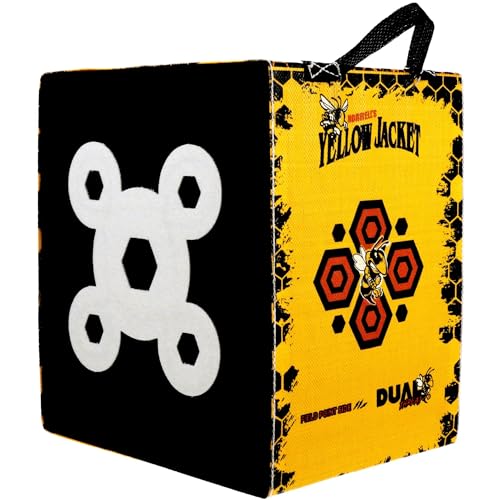
Morrell Yellow Jacket Dual Threat 380 FPS Target Block
Rated to 380 fps and takes both field points and broadheads on separate faces, so you get broadhead practice without destroying the side you shoot field points into all summer.
Best for: Bowhunters practising with both point types on one target.
Check price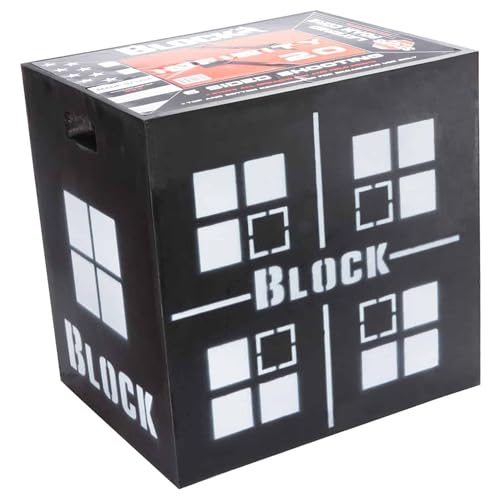
BLOCK Infinity 6-Sided Foam Target, 22 inch
Rated to 500 fps and explicitly rated for broadheads, which matters because a lot of foam targets quietly exclude broadheads in the fine print and then fail in one season.
Best for: Fast modern bows and year-round backyard practice with the heads you hunt with.
Check price
Rinehart 18-1 Broadhead Target, 18-Sided
Self-healing solid foam with 18 shootable faces. Rotating it spreads the wear that kills flat targets, and Rinehart foam is the material 3D courses use because it survives broadheads.
Best for: High-volume shooters who are tired of replacing a target every year.
Check price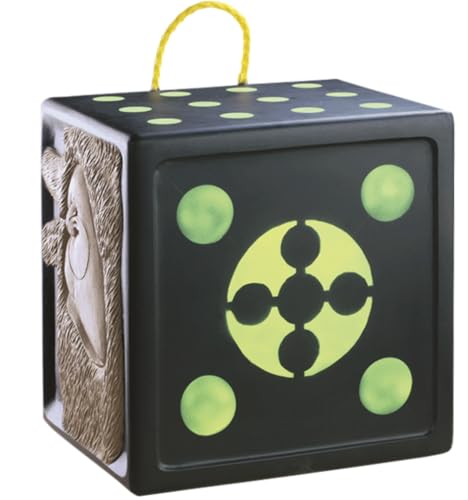
Rinehart RhinoBlock Target, 6-Sided
A large six-sided self-healing block that takes broadheads, crossbow bolts and heavy hunting arrows. Big, heavy, expensive, and the last target a lot of clubs ever buy.
Best for: Clubs, shared ranges, and archers shooting several hundred arrows a week.
Check pricePrices change often, confirm on Amazon. As an Amazon Associate we earn from qualifying purchases.
How we chose these targets
We compared published manufacturer specifications, verified owner reviews and pro shop guidance against four criteria. Point compatibility came first, because shooting broadheads into a target that does not accept them destroys the target in one session and is the single most common expensive mistake here.
Speed rating came second, since a target rated below your arrow speed lets arrows bury past the point where the stopping material was designed to grip. Arrow removal came third, because that is what actually determines whether you shoot 30 arrows an evening or 90. Shootable surface area came fourth: a six or eighteen sided target spreads wear across faces instead of concentrating it, and that is most of what target lifespan really means.
We do not test targets in person. Ratings and dimensions are the manufacturer's published figures, and sizes vary within model lines, so check the dimensions in the listing.
Bag, layered foam, and self-healing foam
Bag targets stop an arrow with layers of synthetic fibre packed under tension. They pull the easiest of any type, cost the least, and are the best value for high volume field point practice. They are also the type most damaged by weather and completely unsuitable for broadheads.
Layered foam targets, the BLOCK design being the clearest example, stop an arrow with friction along the shaft rather than force at the tip. That is why the same target accepts a field point and a broadhead: nothing has to grab the head itself. They handle weather better than bags and cost more.
Self-healing solid foam, which is what Rinehart makes and what most 3D courses use, closes back over the arrow hole. It is the only type that survives concentrated broadhead shooting over years, and it is priced accordingly. If you shoot several hundred arrows a week, it is cheaper per season than replacing a foam block annually.
Targets compared
| Target | Price | Speed rating | Faces | Broadheads |
|---|---|---|---|---|
| Delta McKenzie Speedbag 20 in | $49.99 | Bag | 2 | No, field points only |
| BLOCK Classic 18 in | $77.50 | Foam | 2 | Yes |
| Morrell Yellow Jacket Dual Threat | $99.98 | 380 fps | 4 | Yes, dedicated side |
| BLOCK Infinity 22 in | $166.25 | 500 fps | 6 | Yes |
| Rinehart 18-1 | $164.99 | Self-healing | 18 | Yes |
| Rinehart RhinoBlock | $221.61 | Self-healing | 6 | Yes |
Why targets die early
Almost every target that fails in one season failed in the same way: the owner shot tight groups into one spot. Grouping arrows is the goal, and it is also the fastest way to remove the material holding your arrows. A three inch group repeated 500 times is a three inch hole through the target.
Three habits multiply lifespan. Rotate a multi-sided target regularly rather than favouring the face with the nicest print. Aim at different spots deliberately, using the smaller aiming points a good target prints for exactly this reason. Keep it off wet ground, because saturated foam and fibre both grip arrows far harder and break down faster. A target stored under cover and rotated can easily outlive three targets that were not.
Who should not buy the Expert tier
Rinehart self-healing targets are the longest lasting option here and they are also heavy, expensive and slower to pull arrows from than a bag. The 18-1 in particular is an investment that only pays back over years of high-volume shooting.
Skip the Expert tier if you shoot a few dozen arrows a week, if you only shoot field points, or if you need to move the target in and out of a garage every session. A $50 Speedbag and a $100 Morrell will cover a typical hunting archer's whole year for a third of the money. Self-healing foam earns its price when you are shooting broadheads regularly or running a shared range, not when you are checking your pins before the season.
Buying tips
- Check the dimensions, not just the model. Most of these lines are sold in several sizes at very different prices, and the listing title carries the size.
- Buy an arrow puller. A $10 rubber grip saves bent shafts, pulled inserts and scraped knuckles, and it is the cheapest accessory on this page.
- Do not shoot broadheads into a bag. It is the mistake that turns a $50 target into a bin bag in one evening.
- Match the rating to real speed. Work out your actual figure with the arrow speed calculator rather than trusting the IBO number on your bow.
- Set a safe backstop. Arrows skip off the top edge of targets. Anything behind the target should be something you are content to hit.
- Practise at hunting distances. Most bow shots happen inside 40 yards, so a target you can only fit at 15 yards is still worth having.
Related reading
- Arrow kinetic energy calculator, more energy means deeper penetration into the target too
- Best hunting arrows, what you will be pulling out of it
- Best archery release aid, blind bale practice needs a big forgiving target
- All gear reviews
Frequently asked questions
What is the best archery target for a compound bow?
For most archers the BLOCK Infinity at around $166 is the best choice, because it is rated to 500 fps and explicitly rated for broadheads, so one target covers both practice and pre-season broadhead checks. If you only shoot field points, a Delta McKenzie Speedbag at around $50 pulls arrows more easily and costs a third as much. High-volume shooters should look at self-healing Rinehart foam.
Can I shoot broadheads into a bag target?
No. Bag targets stop arrows with layered fibre, and a broadhead cuts those fibres rather than compressing them, which destroys the target in a handful of shots and can leave the head buried. Use a layered foam target rated for broadheads, or a dedicated broadhead target. Every target on this list states which point types it accepts, and the fine print is worth reading before you shoot.
Why are my arrows so hard to pull out?
Usually because the target is rated below your bow speed, so arrows bury deeper than the foam was designed to allow. Fast bows with light arrows penetrate the furthest. Check the fps rating against your real arrow speed, keep the target dry since wet foam grips harder, and use an arrow puller for grip. A tired target that has been shot into one spot repeatedly will also grab.
How long does an archery target last?
It depends far more on how you use it than on the brand. Shooting a tight group into one spot destroys any target quickly, because you are removing the same foam over and over. Rotating the target between faces, moving your aim point around, and keeping it out of standing water can multiply its life several times over. Self-healing foam like Rinehart handles concentrated shooting best.
What speed rating do I need?
Match the rating to your actual arrow speed, not your bow IBO number. IBO is measured at a 30 inch draw, 70 lb and a 350 grain arrow, and most archers shoot slower than that. A 350 fps target is enough for the majority of hunting setups, and a 500 fps rating buys headroom for fast bows, light arrows and crossbows. Under-rating a target is how you get arrows stuck.
Where should I set up a backyard target?
Somewhere with a solid backstop behind it, a clear lane with nothing crossable behind the target, and a downward or level shooting angle. An arrow that skips off the top of a target keeps travelling a long way. Check local ordinances too, since many towns restrict discharging a bow within city limits regardless of how safe your setup is.
How we choose: we compare published manufacturer specifications, verified owner reviews, and pro shop guidance. We do not test gear in person. Draw weight and arrow spine affect safety, so follow your bow manufacturer's specifications and have setup work checked by a qualified pro shop.